
The long-legged development of the Global 5000: the same 2.41 m by 1.88 m cabin cross-section and the same 5.52 m³ hold, with 77 cm more cabin - 13.18 m - and 11,112 km of published range, twice the longest route on this website. Thirteen to fourteen seats, six to seven berths. This page explains what those numbers buy on the sectors we actually fly.
REQUEST A QUOTEEvery figure in this block is copied from the specification table on our partner operators' aircraft page for this type. Nothing here is a manufacturer brochure number and nothing has been rounded up.
11,112 km published range against a longest published route of 5,500 km. On this network the Global 6000 is never asked for more than half of what it has, so the useful questions are about the cabin, the hold and what the surplus is worth even when unused. All three are below.
The number that matters on a chartered aircraft is not the headline range but the margin left over once the headline range has been spent. A published range figure is a still-air, optimum-cruise, sensible-payload figure. Fill all fourteen seats, load 5.52 m³ of luggage and fly into a winter jet stream, and the usable figure comes down - and on a sector where the margin was thin to begin with, that is the difference between a nonstop and a fuel stop.
On this type the margin is 5,612 km on the longest route we publish, London to Dubai at 5,500 km. In other words the aircraft could fly that sector and then fly it again. The remaining Gulf routes, from Amsterdam at 5,169 km down to Athens at 3,273 km, leave between six and eight thousand kilometres unspent.
That surplus is worth something even when you are not using it. An aircraft with range in hand is the one least likely to be re-planned around the weather on the morning of departure, least likely to need a technical stop when the routing goes the long way round closed airspace, and least likely to have to leave two passengers or the luggage behind to make the numbers work. It is also the aircraft that flies a long sector and repositions without a fuel stop in between, which is what keeps a multi-leg itinerary on the schedule you were given.
None of that is a promise for your specific day. Published range is a specification, not a guarantee: the operating crew plans every flight against the actual weight, the actual weather and the actual alternate airfields, and their number is the one that counts. What the table below tells you is that on this network none of our sectors are anywhere near the limit of this type.
| Published route | Distance | Nonstop? | Margin against the published range |
|---|---|---|---|
| London to Dubai | 5,500 km | Yes, with margin | Inside by 5,612 km |
| Amsterdam to Dubai | 5,169 km | Yes, with margin | Inside by 5,943 km |
| Geneva to Dubai | 4,920 km | Yes, with margin | Inside by 6,192 km |
| Zurich to Dubai | 4,769 km | Yes, with margin | Inside by 6,343 km |
| Milan to Dubai | 4,662 km | Yes, with margin | Inside by 6,450 km |
| Dubai to Munich | 4,565 km | Yes, with margin | Inside by 6,547 km |
| Vienna to Dubai | 4,224 km | Yes, with margin | Inside by 6,888 km |
| London to Larnaca | 3,288 km | Yes, with margin | Inside by 7,824 km |
| Athens to Dubai | 3,273 km | Yes, with margin | Inside by 7,839 km |
| London to Paphos | 3,228 km | Yes, with margin | Inside by 7,884 km |
| London to Mykonos | 2,568 km | Yes, with margin | Inside by 8,544 km |
| Larnaca to Nice | 2,461 km | Yes, with margin | Inside by 8,651 km |
Below 2,400 km the question stops being interesting: every remaining route on this website is inside the range of this aircraft with room to spare. These are the mid-length ones, from about an hour and a quarter to two and a half hours by our own published flight-time estimates.
Distances are great-circle figures between airport coordinates from the OurAirports open dataset, retrieved 23 August 2026. Flight times quoted anywhere on this page are estimates from a model fitted to the flight times Diamond Executive Aero Services already publishes, not measured block times. The 19 routes shorter than 700 km are listed on the route index. Range figures are the ones published on our partner operators' aircraft page and assume still air, optimum cruise and a sensible payload.
13.18 m long, 2.41 m wide, 1.88 m high, thirteen to fourteen seats, six or seven of which become beds, and a 5.52 m³ hold that is reachable in flight. Here is what each of those measurements means once you are on board.
The extra 77 centimetres. Our specification tables put the Global 5000 cabin at 12.41 m and this one at 13.18 m, on an identical 2.41 m by 1.88 m cross-section. The description we publish for the type calls it an improved cabin layout, and that is where the length goes - into the divisions between the sections rather than into extra seats, since both aircraft list thirteen to fourteen.
Width. 2.41 m is the widest cabin of the types our partner operators' aircraft page groups alongside this one: the Falcon 7X lists 2.34 m and the G550 2.24 m. It is the dimension you notice first, because it decides whether people pass each other in the aisle or wait.
Standing up. Cabin height 1.88 m, a shade over six foot two, so almost every adult walks the cabin upright.
Sleeping. Six to seven berths out of thirteen to fourteen seats. On sectors of six hours and more - which is what the Gulf routes on this site are - that ratio, not the range figure, is what usually decides the aircraft.
Luggage. 5.52 m³, accessible during the flight, and the same volume our tables give the Global 5000 and the Global 7000. Against the Falcon 7X at 4.00 m³ and the G550 at 4.81 m³ that is a real difference, and it is the specification line to check when the party travels with sports equipment.
Cabin dimensions, berth counts, baggage volumes and the flight-attendant line are all taken from the specification tables published on this website, including the comparison figures quoted for other types.
The aircraft and the cabin as they are, and the seating plan underneath. These are the images we publish for this type.
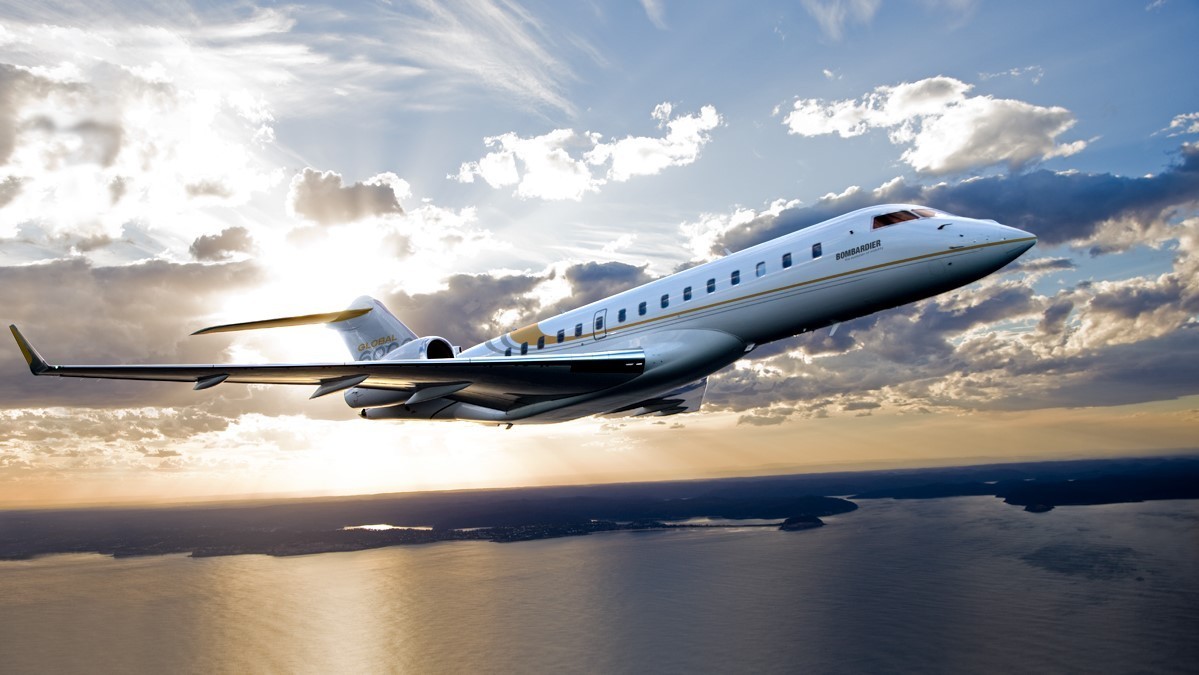
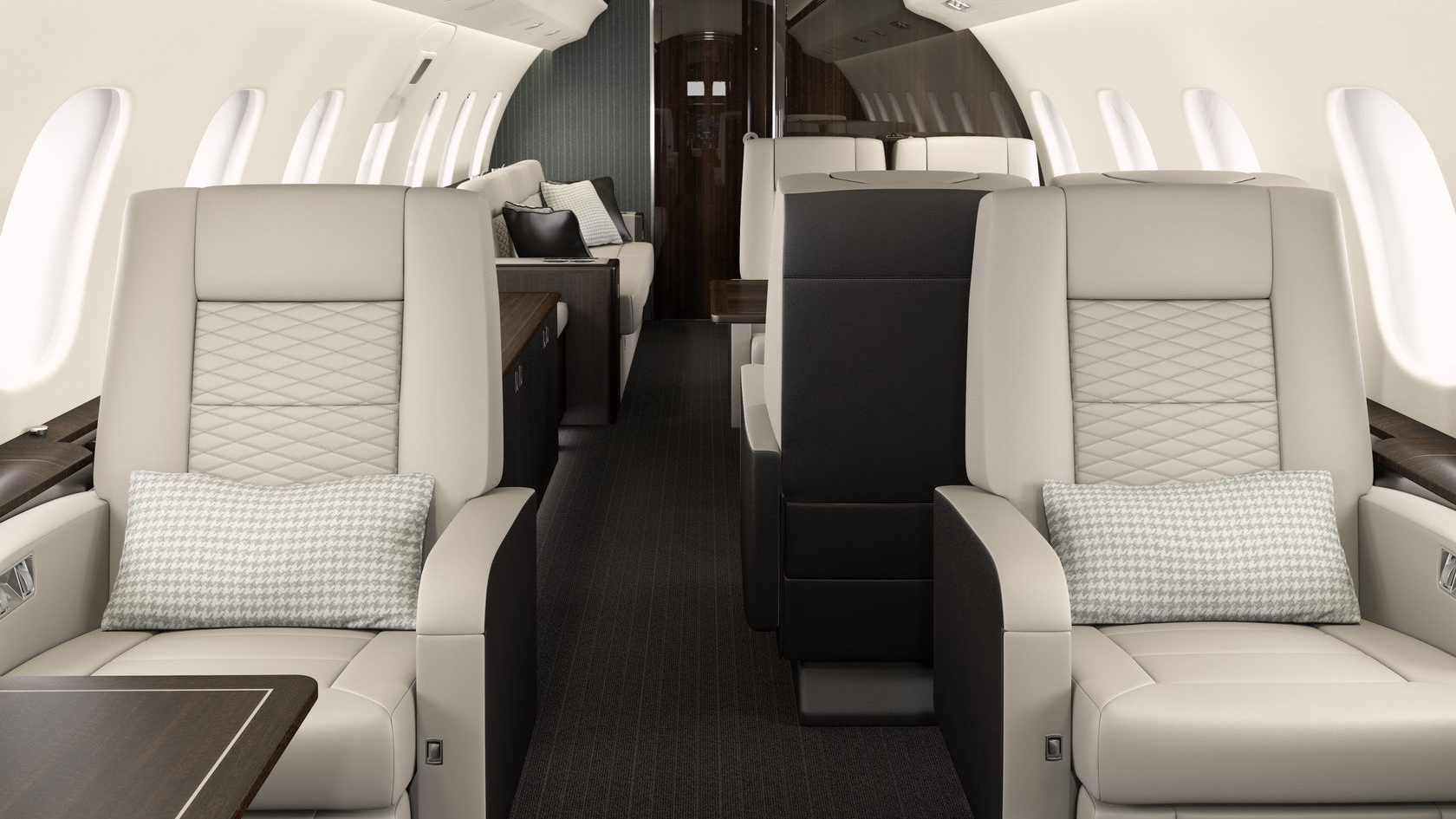
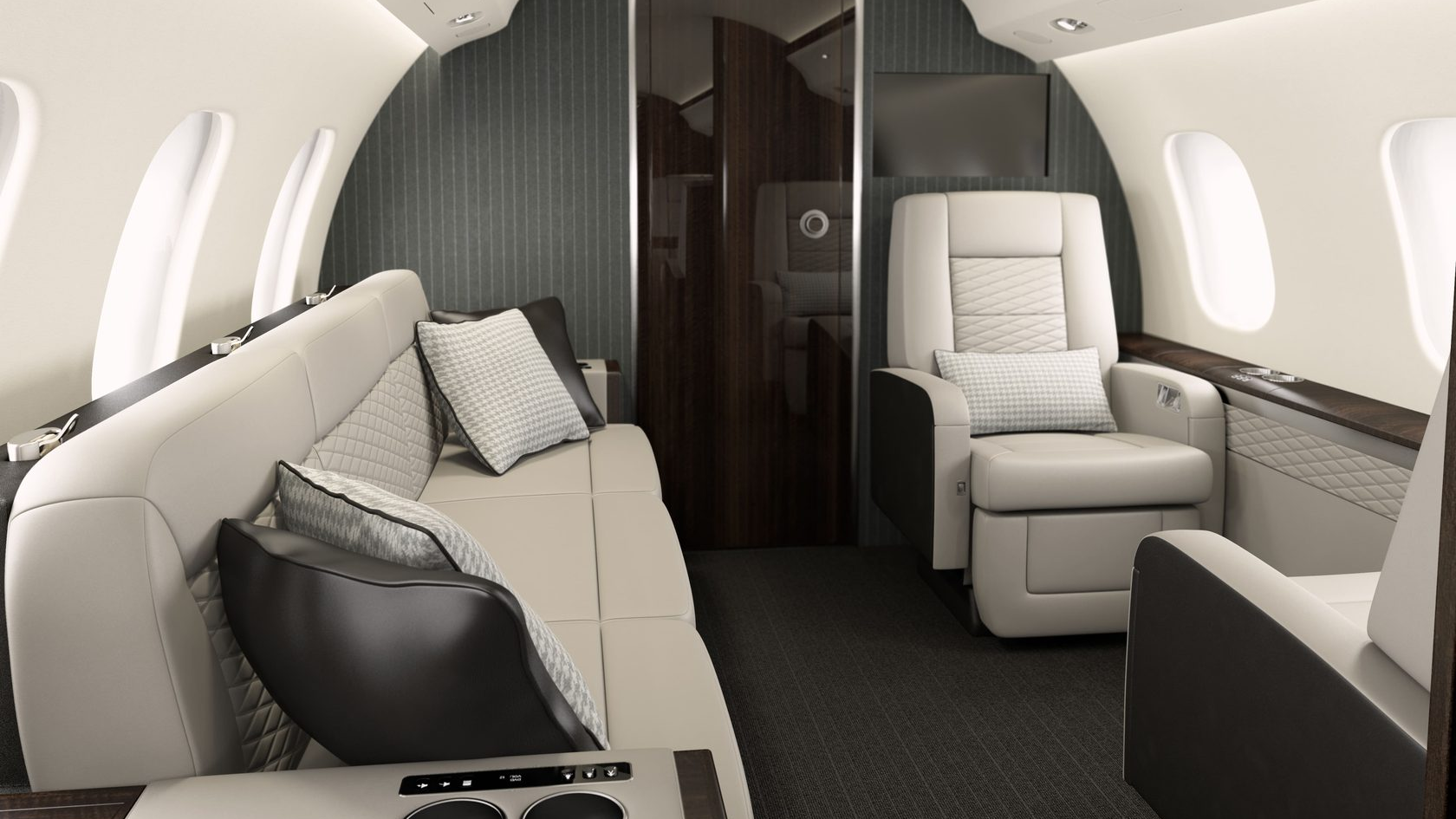
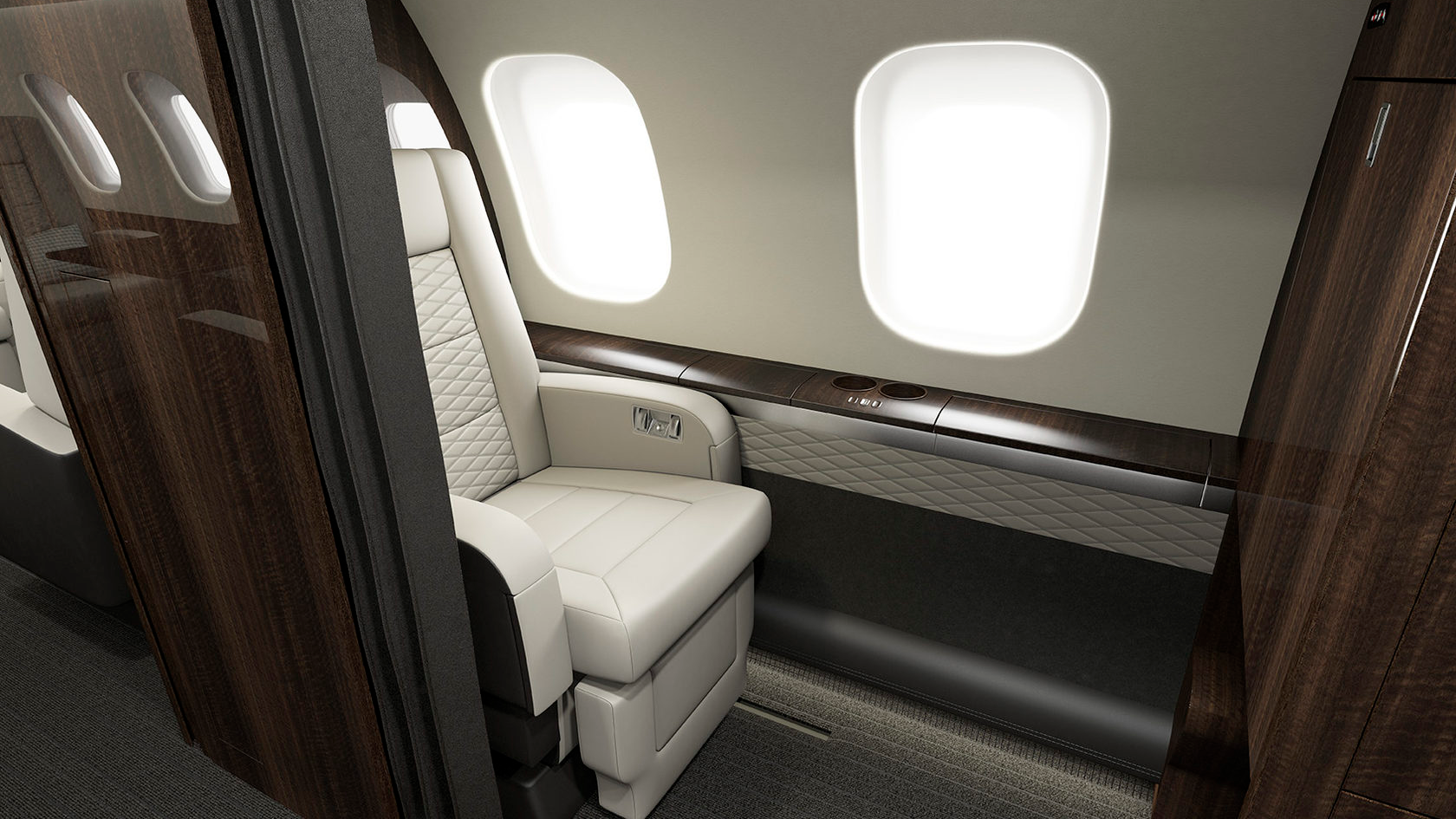
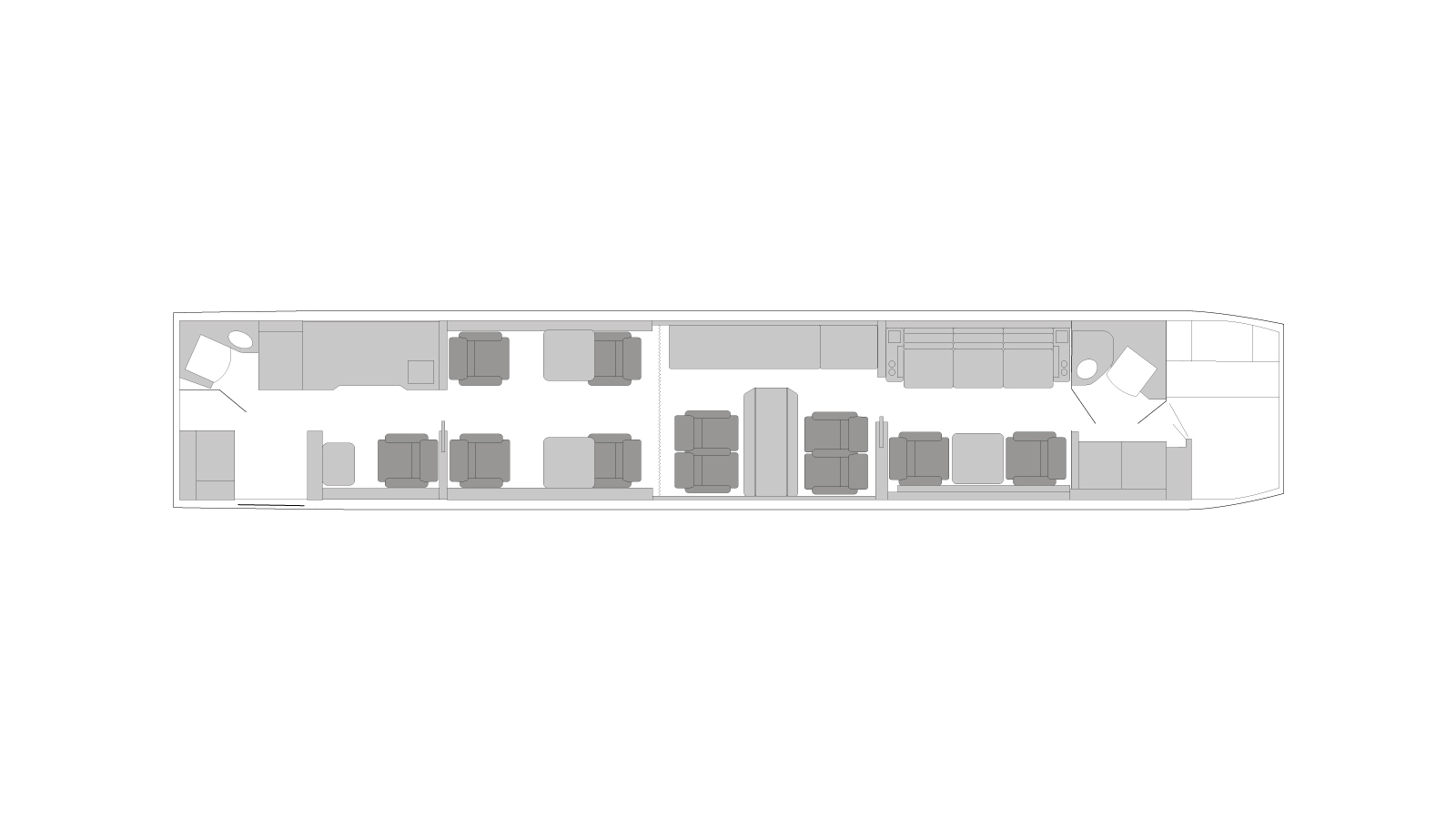
These are our own figures for this aircraft, not somebody else’s estimate. They are whole-aircraft prices for the sectors named, at the passenger count shown, and they move with the date, the positioning of the aircraft and the fuel price on the day. Treat them as the size of the number rather than as a quotation: only a written quotation against your dates is a price. Our own guide rate for the type is EUR 7,600 per flight hour; the sector figures below are whole-aircraft prices and are not that rate multiplied by the flight time.
| Sector | Passengers | Price | Time |
|---|---|---|---|
| Helsinki - Malaga | 4 | 58700 € | 04:50 |
| Larnaca - Vienna | 4 | 21000 € | 03:00 |
| Larnaca - Zurich | 8 | 24500 € | 03:30 |
Tell us your route, your dates and how many of you there are. Your dedicated flight advisor will come back with availability and a firm price.
These are the types our partner operators' aircraft page groups alongside the Global 6000/XRS. Every figure quoted below is from their specification tables on this website.
Our partner operators' aircraft page lists 12,501 km, 13-19 passengers and 6-8 berths in a 13.39 m cabin at 2.24 m wide. More range and seats, a narrower cabin, a smaller hold.
See the Gulfstream G550 ›Listed at 11,019 km, 13-16 passengers and an 11.91 m cabin at 2.34 m wide, with a 4.00 m³ hold. Comparable range, more seats, less luggage.
See the Falcon 7X ›Listed at 13,890 km and the largest cross-section on our partner operators' aircraft page, 2.59 m by 1.96 m, with 6-10 berths. The step up in every dimension.
See the Gulfstream G650ER/650 ›All partner operators' aircraft are on the aircraft index. Also useful: all published routes, current empty legs, jet sharing, how chartering works.